THE HIDDEN COSTS OF COMMON PAIN RELIEVERS
September 24, 2025
Aspirin, ibuprofen, and acetaminophen (Tylenol / paracetamol) are among the most familiar drugs in the world. They sit in bathroom cabinets, purses, and desk drawers, ready to ease a headache, bring down a fever, or soothe sore muscles. Their constant presence has made them feel less like medicines and more like everyday essentials.
Yet that familiarity can be misleading. Because we use them so casually, it is easy to forget that these are powerful drugs. Each one acts on the body in different ways and, while they can provide quick relief, they also carry the potential to harm vital organs like the stomach, kidneys, liver, and even the developing brain.
This shift in how we view these medications in itself might be risky. It raises a question worth asking: when we reach for pain relievers, are we weighing only the short-term comfort, or also the hidden costs that may come later?

Explore some of my favorite recommended products to support your health journey (displayed on this page as affiliate links), and remember to always consult a healthcare professional before making any changes to your diet or lifestyle—full medical disclaimer here.
How these drugs work
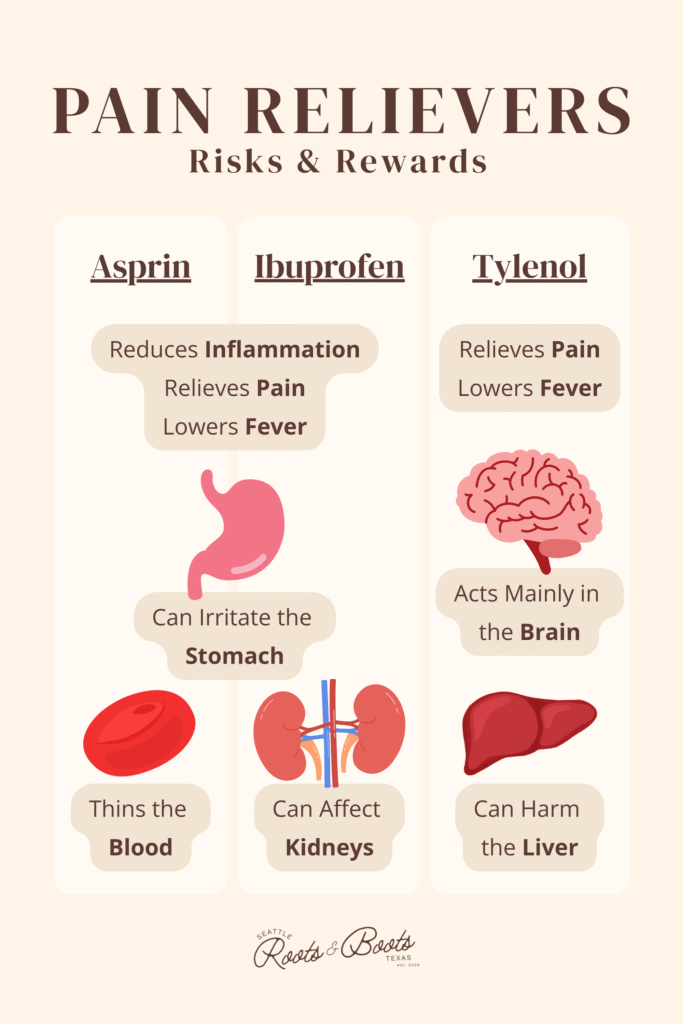
These pain and fever reducers all work by changing how the body handles pain signals, inflammation, and temperature, but they do it in slightly different ways. Aspirin and ibuprofen belong to a class of drugs known as NSAIDs. They reduce pain, bring down fever, and calm inflammation by blocking natural chemicals in the body that trigger swelling and discomfort. Aspirin also thins the blood, which is why doctors sometimes prescribe it to lower the risk of heart attacks and strokes.
Acetaminophen, on the other hand, does not fight inflammation as strongly. Instead, it mainly works in the brain, lowering fever and changing the way we feel pain.
Short-term Risks
Most people can take aspirin, ibuprofen, or acetaminophen occasionally without major problems. But even in the short term, these drugs can strain the body if the dose is too high or if someone is already sick or dehydrated.
Aspirin and ibuprofen often irritate the stomach, sometimes leading to heartburn, ulcers, or even bleeding. Because aspirin thins the blood, it can also make bleeding harder to stop. These drugs may reduce blood flow to the kidneys as well, which can be dangerous in people with high blood pressure or kidney problems.
Acetaminophen works differently. It is gentler on the stomach, which is why many people prefer it, but the liver is at risk if too much is taken. Accidental overdose is surprisingly common, since acetaminophen is hidden in many cold and flu remedies as well as pain relievers. In fact, it is among the leading causes of acute liver failure.
Long-Term Risks
There is more concern when these drugs are used frequently or for long periods. Regular use of NSAIDs like aspirin or ibuprofen can slowly damage the kidneys, and over time this may lead to chronic kidney disease. The digestive system is also at risk, since long-term NSAID use raises the chance of ulcers and internal bleeding.
For acetaminophen, the main long-term danger is liver damage. Even slightly exceeding the recommended dose on a daily basis can harm the liver without obvious warning signs at first. Meanwhile, research also shows mixed signals about the heart. While low-dose aspirin is sometimes prescribed to prevent blood clots, other NSAIDs have been linked to a higher risk of heart attack and stroke when used over many years.
Questions around mental and developmental health
Pregnancy and Early Development
For years, doctors have advised against using common pain relievers like aspirin and ibuprofen during pregnancy, since they’ve been shown to increase risks such as miscarriage, heart problems, and developmental issues. Acetaminophen (Tylenol), however, has long been considered the “safe” option.
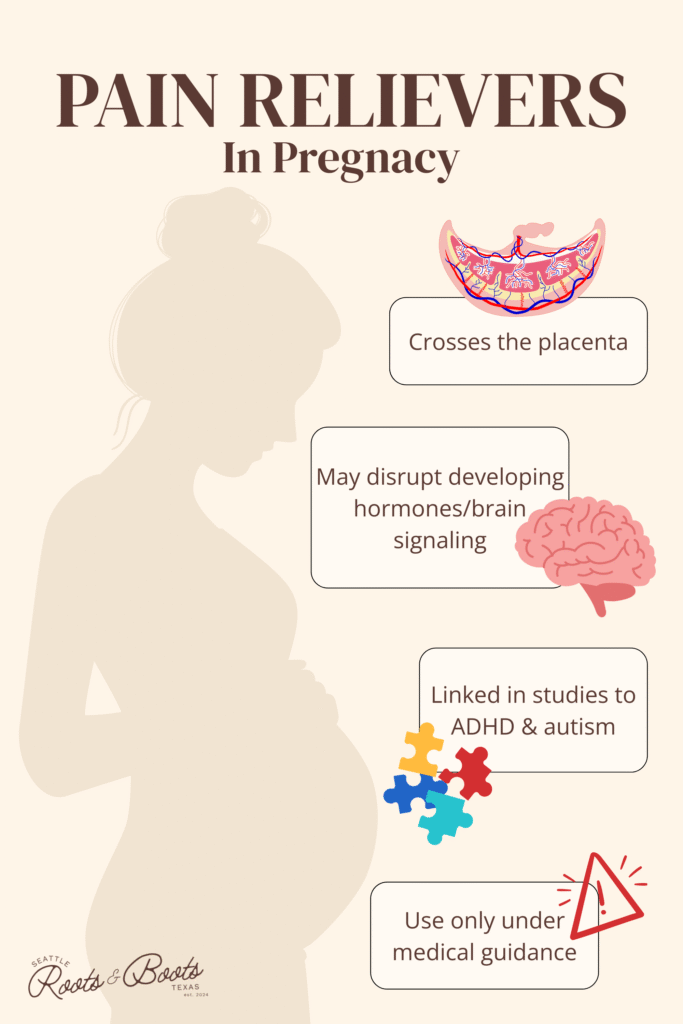
But recent research has raised new concerns about acetaminophen’s safety during pregnancy and early childhood. Large reviews and population studies have found that children exposed in the womb were more likely to later be diagnosed with conditions such as ADHD or autism.
Acetaminophen may cross into the placenta, meaning the drug taken by the mother also reaches the baby’s bloodstream. Once there, it may interfere with hormone balance and brain signaling during sensitive periods of development. Even small disruptions at these stages could affect how the brain grows and organizes itself, which may help explain the patterns researchers are observing.
Regulatory and Medical Guidance
Reflecting these concerns, the U.S. FDA announced on September 22, 2025, that it is initiating a safety label change for acetaminophen and formally notified clinicians about a possible association with neurodevelopmental outcomes. The agency urged caution, recommending that both medical professionals and patients weigh the necessity of use more carefully.
At the same time, professional guidance remains steady. The American College of Obstetricians and Gynecologists advises that acetaminophen can still be used during pregnancy when truly needed—especially for pain or fever—but only at the lowest effective dose and for the shortest time possible, under medical supervision. They emphasize that available studies show associations, not proof of cause, and that all decisions in pregnancy should be made with a qualified clinician.
Adults and Mental Health
For adults, the picture is less clear. Research into long-term effects on mood or cognition has produced inconclusive results. What is certain, however, is that these drugs act on the brain, and even subtle effects deserve closer attention as we learn more.
Association vs. Causation
When studies show an association, it means two things appear linked, but one may not directly cause the other. Proving causation requires much stronger evidence from multiple study types — the kind of research we can’t ethically do on babies or pregnant women. With acetaminophen in pregnancy, the research is concerning enough that the FDA has required label changes, but experts still describe it as an association rather than a proven cause.
That said, an association is not meaningless, it shows a consistent link between a variable and an outcome. Just because causation hasn’t been proven doesn’t mean the risk should be ignored — associations are often the first warning sign in science, and they are exactly why caution is recommended.
A question of balance
Ultimately, the story of these medications is not about whether they are “good” or “bad,” but about balance. They provide genuine relief and, in many cases, can be lifesaving. Yet their casual, everyday use risks creating a society that sees powerful drugs as harmless household items. This shift in perception may be one of the most significant long-term consequences of all.
The central question remains: when we reach for aspirin, ibuprofen, or acetaminophen, are we fully considering the trade-off between short-term relief and long-term cost? The answer may vary from person to person, but it is a question worth asking every time.
National Kidney Foundation. “Watch Out for Your Kidneys When You Use Medicines for Pain.” kidney.org.
Johns Hopkins Medicine. “Analgesic Nephropathy.” hopkinsmedicine.org.
U.S. National Library of Medicine. “Aspirin.” LiverTox: Clinical and Research Information on Drug-Induced Liver Injury. ncbi.nlm.nih.gov.
PubMed Central. “Effect of low-dose aspirin on kidney function.” PMC.
Environmental Health. “Evaluation of the evidence on acetaminophen use and neurodevelopmental disorders.” Environmental Health, 2025. ehjournal.biomedcentral.com.
Mount Sinai. “Prenatal Acetaminophen Use May Be Linked to Increased Risk of Autism and ADHD.” mountsinai.org.
Harvard T.H. Chan School of Public Health. “Using Acetaminophen During Pregnancy May Increase Risk of Autism and ADHD.” hsph.harvard.edu.
American College of Obstetricians and Gynecologists (ACOG). “ACOG Affirms Safety and Benefits of Acetaminophen in Pregnancy.” acog.org.
U.S. Food & Drug Administration. “FDA Responds to Evidence of Possible Association Between Autism and Acetaminophen Use During Pregnancy.” fda.gov.

The article looks great, Beautiful!